
Thematic ETFs

Case Study Analysis of Using ETF Options for Directional Trading in the Memory Sector
Directional trading in the memory sector used to mean picking individual DRAM or NAND stocks and riding the cycles. Today, there is a cleaner, more structured way to express those views: options on thematic ETFs dedicated to memory and AI storage. These products wrap a complex, global supply chain into a single tradable instrument, and their option chains open the door to a wide range of strategies, from aggressive directional bets to more nuanced hedging and income approaches.
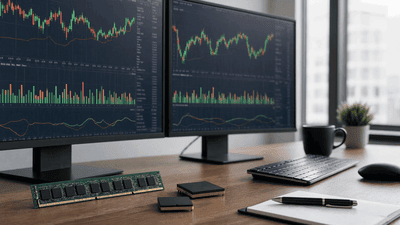
A Methodology for a Dedicated Memory Chip Index (Focusing on ASP and Bit Growth Dual Factors)
AI storage and computing power increasingly depend on one core ingredient: memory. DRAM, NAND, and especially HBM are no longer just cyclical commodities; they are central to the performance and economics of AI data centers. Yet most semiconductor indices still treat memory as one subsector among many, and most AI hardware indices mix memory exposure with compute and equipment in ways that can blur the underlying drivers. If you want a clean instrument for memory risk and opportunity, you need a dedicated memory chip index built around the actual economics of the business—above all, average selling prices (ASP) and bit growth.
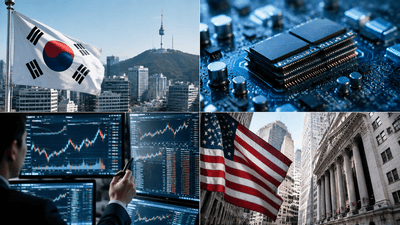
Cross-Market Hedging Strategies Between Korea HBM Thematic ETFs and SOX
In 2026, the global AI trade doesn’t start in Silicon Valley; it often starts in Seoul. Korea’s memory giants, especially in high-bandwidth memory (HBM), have become key price-setters for AI hardware, while the Philadelphia Semiconductor Index (SOX) still anchors U.S. chip sentiment. Cross market hedging between a Korea HBM-focused theoretical ETF and SOX is therefore more than an academic exercise—it is a practical question for anyone allocating to AI storage and computing power across regions.

Smart Beta Application in Memory Thematic ETFs – Momentum and Reversal Factor Validity Tests
Smart beta sounds technical. Memory poetic ETFs sound almost mythical. Put them together, and you get a strange, fascinating intersection: a place where rules-based factor investing collides with the fast-evolving world of AI storage and computing power, wrapped in a thematic narrative that feels more like storytelling than like cold finance. Yet beneath the poetic framing, there are very real questions: Do factors like momentum and reversal actually work in such specialized ETFs? Can we meaningfully test their validity in a universe defined by data centers, memory modules, and silicon?

Quantifying the Dual Drivers (Crypto Mining & AI Storage Demand) on the Same Index Constituents
There is a curious overlap emerging in modern infrastructure: the same companies that once existed purely to mine cryptocurrencies are now being courted as potential providers of AI storage and computing power. Power-hungry bitcoin miners are repackaging themselves as high-performance computing (HPC) and AI infrastructure platforms, offering energy, cooling and rack space to both blockchains and machine learning workloads. For index designers and ETF investors, that creates a challenge and an opportunity: how do you quantify the dual drivers of crypto mining and AI storage demand acting on the same constituents?

Rolling Alpha Comparison of the Pure-Play Memory ETF (MEM) vs. Broad Semi ETFs
A pure play memory ETF like MEM sits right at the heart of AI storage demand. It focuses on DRAM, NAND, and HBM names that supply the bandwidth and capacity modern AI workloads need. Broad semiconductor ETFs, by contrast, spread exposure across logic, compute, equipment, foundry, analog, and memory. When you compare their performance over time, you are really asking a deeper question: does concentrating on memory produce persistent alpha, or does it deliver bursts of outperformance and underperformance that net out over cycles?

An Attempt at Compiling a Memory+Compute Fusion Thematic Index – A Dual-Track Framework
Most AI investors talk about “compute” as if it were the whole story: GPUs, accelerators, chips, cores. But every one of those cores needs somewhere to read from and write to. Memory and storage define how wide the data highway really is. In practice, AI performance is a fusion of compute and memory, not a solo act. So why do so many indices and ETFs separate them into different silos—one for semiconductors, one for memory, one for data centers—when the actual workloads keep blending them?
Cross-Market Spread Arbitrage Empirics Using US-Listed AI ETFs vs. Korea Memory Stocks
AI storage and computing power have created a peculiar interlinked market structure. On one side sit US‑listed AI and semiconductor ETFs that bundle GPU designers, cloud infrastructure, and selected memory names into a single tradable instrument. On the other side sit Korea’s memory giants—Samsung Electronics and SK Hynix—listed in their home market and sometimes via ADRs, whose fortunes are increasingly tied to HBM and DRAM demand for AI workloads. Cross market spread arbitrage between these two worlds is about exploiting valuation and timing gaps when their prices diverge more than fundamentals warrant.
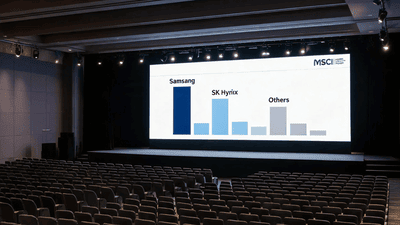
Trends in the Dominance of Korea’s Memory Duo (Samsung/SK Hynix) in the MSCI Korea Index
AI storage and computing power are not abstract concepts in Korea. They are embodied in two names: Samsung Electronics and SK Hynix. Together, this memory duo has become so dominant that the MSCI Korea Index—and any ETF or index derivative tied to it—is increasingly a leveraged bet on AI memory cycles. Understanding how their dominance has evolved, and what it implies for AI storage and compute exposure, is essential for anyone trading Korea-focused ETFs or using index derivatives as hardware proxies.

Divergence Alert Signals Between Memory ETF Implied Volatility and Industry Fundamentals
AI storage and computing power have pushed memory from a quiet subsector into the center of investor attention. DRAM, NAND, and especially HBM now anchor multi‑billion‑dollar ETFs and a growing ecosystem of options and index derivatives. As that ecosystem matures, implied volatility on memory ETFs has become one of the most watched gauges of risk and opportunity. But implied volatility is not the same thing as fundamentals. When memory ETF implied vol and industry fundamentals diverge, the difference is not just noise. It is an alert signal.
Popular

Narrowing Spread Between NAND Spot and Contract Prices in 2026 – A Signal
By 2026, one of the most watched metrics in the NAND flash market has started to shift in a subtle but meaningful way: the spread between spot prices and long‑term contract prices is narrowing. For casual observers, this may look like just another incremental change in a notoriously volatile industry. For memory makers, module houses, device OEMs, and data center buyers, however, a tightening gap between spot and contract prices is a signal—a reflection of evolving supply–demand balance, risk perceptions, and strategic behavior on both sides of the market.

Price Divergence Trading Strategies Between NAND Flash and DRAM ETFs
NAND flash and DRAM sit at the core of AI storage and computing power. Both are memory, but they are not the same business. DRAM is main memory—fast, volatile, and central to high‑bandwidth workloads like AI training and inference. NAND is non‑volatile storage—slower than DRAM, but crucial to persistent data and large‑scale object storage. The cycles that drive their pricing and margins overlap, yet they often diverge. That divergence is where trading strategies between NAND and DRAM ETFs become interesting.

China’s HBM Localization Progress: The Catch-Up Pace of CXMT and XMC
China’s drive to localize advanced memory technologies has accelerated over the past several years. High-Bandwidth Memory (HBM) sits near the center of that strategy because it is integral to AI accelerators, high-performance computing (HPC) and other strategic compute platforms. Two domestic players—ChangXin Memory Technologies (CXMT) and XMC (Xianghui Memory, commonly referred to as XMC)—have become focal points in assessing how quickly China can close the gap with international incumbents on HBM die, stacking, and packaging.